A useful glossary of common cooking terms, including cooking methods, ingredients, kitchen equipment and tools. Master these cooking terms to improve your skills and become more confident in the kitchen!

If you’ve ever found yourself confused by terminology in a recipe, I’ve got you covered! Here’s a handy A-Z glossary to common (and less common) cooking terms. You can use the letters below to jump ahead if you’re searching for particular culinary terms. If you’re a beginner or intermediate cook, I highly recommend taking a look through the entire glossary of cooking terms to start familiarizing yourself with all of them! It will help take your kitchen skills to the next level.
Jump Ahead: A B C D E F G H I J K L M N O P Q R S T U V W X Y Z
Aioli
The French term for a flavored mayonnaise made from garlic, egg yolks, oil, seasoning, and lemon juice. Commonly served as a dipping sauce.
Al dente
Translates from the Italian phrase “to the tooth.” This term describes the correct degree of cooking for pasta: neither overly soft nor underdone, but slightly toothsome.
Aromatic
Any vegetable, herb, or spice used to enhance the flavor of a dish. “Also used as an adjective to describe something having a fragrant aroma.
Bain-Marie
A hot water bath used to keep food warm on the stovetop, or prevent custards and baked eggs from curdling or cracking when cooked in the oven. This term can also refer to a utensil similar to a double boiler, with a simmering pot of water below and a bowl for cooking above.
Bake
A cooking technique that uses direct, dry heat, usually in an oven. Most commonly describes the cooking method for cakes, casseroles, breads, and desserts.
Baker’s Dozen
Providing 13 baked goods for the price of 12. The baker’s dozen was established in response to severe punishments imposed on medieval bakers who short-changed their customers.
Batter
A wet, uncooked mixture typically made from a base of flour, eggs, and milk or water, which can be poured or spooned. Batters might be thick or thin depending on the recipe.
Barbecue
A long, slow cooking method most frequently associated with meat. Barbecue refers to an outdoor cooking technique that uses the indirect heat of an open charcoal or wood fire.
Baste
The process of moistening foods during cooking by spooning or pouring a liquid onto the surface. Basting adds flavor, prevents drying, or creates a glaze.
Beat
Rapidly whipping a mixture to incorporate air, making it smooth and light. May be done with a spoon, whisk, or electric mixer.
Béchamel
One of the five mother sauces in French cooking, a béchamel is a smooth, white sauce made from a roux of flour, butter, and milk. Often served with white meats, eggs and vegetables, it’s also the base of many other sauces, including cheese sauce. {See béchamel in action: Stovetop Macaroni and Cheese}
Bench Scraper
A kitchen tool used to remove dough that’s stuck to a work surface. It may also be used to cut the dough into portions.
Bias-Slice
A slicing technique in which food is cut crosswise at a 45-degree angle. You will sometimes see instructions in recipes to “slice on the bias.”
Blanch
A technique used to intensify color and flavor by boiling or steaming fruits, vegetables, and nuts until partially cooked, then plunging them into cold water to halt the cooking process.
Blind-Bake
Baking a pie crust or other pastry shell before the filling is added. {See blind-baking in action with my Chocolate Tart!}
Blend
Combining two or more ingredients until smooth and uniform in color, flavor, and texture. Blending can be done by hand, with an electric mixer, in a blender, or using a food processor.
Bloom
The process of softening gelatin in liquid before using it in a recipe, assuring a smooth texture in the final dish. Powdered gelatin is typically sprinkled into the liquid and allowed to sit for 3 to 5 minutes.
Boil
To cook food submerged in a boiling liquid that has been heated to at least 212 degrees F (or as low as 198 degrees F at higher elevations).
Bouquet Garni
A bundle of fresh herbs that adds flavor to soups, stews, stocks, and poaching liquids. Usually includes thyme, parsley, and bay leaf. Often tied together with butchers twine, sometimes contained in cheesecloth.
Braise
A slow-cooking method common for tough cuts of meat, in which the meat is cooked in a tightly covered pan with a small amount of liquid.
Bread Flour
A flour with higher protein content than standard all-purpose flour, designed to support gluten production and ensure bread dough with good stretch and elasticity. {Learn more about bread flour}
Breading
A coating of breadcrumbs or cornmeal applied before cooking to produce a crisp exterior.
Brine
Soaking meat, seafood, or vegetables in heavily salted water. Brining may be used before cooking to keep meats moist and tender, or during a pickling process.
Broil
Cooking on a rack or spit under intense and direct dry heat, usually in an oven.
Broth
A flavorful liquid produced by simmering meat, poultry, or fish with vegetables and herbs, then straining out any solids. Broth is generally thinner than stock, as it is made without bones and cartilage.
Brown Butter
A single-ingredient sauce made by simmering butter until the milk solids separate.
Bruising Herbs
Pounding fresh herbs to release their aromatic oils before cooking. Commonly used for resinous herbs like rosemary and thyme.
Brown
Partially cooking the surface of meat in a pre-heated pan to impart flavor and create a brown-colored crust. Browning can be used to remove excess fat, or to pre-cook ground meat before it’s added to a casserole or similar dish.
Butterfly
Splitting a food through the middle without fully separating the halves, so it resembles a butterfly when opened flat.
Cake Flour
A finely milled, bleached flour that’s lighter and softer than all-purpose flour. Cake flour also contains less protein than AP flour. {Learn more about cake flour}
Candied
Fruits, nuts, or citrus peels that have been encrusted with sugar or a sugar syrup.
Caramelize
Heating sugar until it liquefies and transforms into a caramel syrup. This term can also refer to the cooking of meats or vegetables until their natural sugars break down and the surface darkens, adding flavor and texture.
Carry-Over Cooking
When foods, especially meats, retain heat and continue to cook after being removed from the heat source.
Cheesecloth
A thin cotton cloth that can be used to bundle herbs, strain liquids, or wrap rolled meats.
Chiffonade
A French word meaning “made of rags,” this term refers to a technique of cutting herbs or greens into thin strips or shreds. {See this technique applied to basil in my Sun-Dried Tomato Pasta}
Chop
Cutting foods into smaller pieces using a knife, cleaver, or food processor.
Clarified Butter
Also known as drawn butter, this is butter from which the milk solids have been removed. Commonly used as a dipping sauce for seafood. Clarified butter also has a high smoke point, making it a flavorful option for searing meats.
Clarify
To remove all solid particles from a liquid using a special cooking process. In most cases, a liquid is clarified by simmering until the solids are separated; it is then strained or skimmed. Butter, stock, and rendered fat can all be clarified.
Confit
A French term for preserving meat (usually pork, duck, or goose) by salting the meat and slowly cooking it in its own fat. Confit meats are stored in crocks and sealed with additional fat. Over time, the word has evolved to include almost any food cooked slowly in fat or oil, such as onion confit, as well as fruit that has been candied in sugar syrup.
Convection Oven
A traditional oven equipped with a fan to circulate the hot air, promoting faster and more even cooking. Convection ovens are especially good for baking.
Core
Removing the stems, seeds or woody center from a fruit or vegetable.
Coulis
The French term for a thick sauce made from pureed fruits or vegetables.
Cream
To beat a fat such as butter or shortening until it achieves a light, fluffy consistency, promoting better texture and volume in baked goods. Sugar is often added during the creaming process, which can be done by hand with a wooden spoon, with an electric mixer or with a stand mixer.
Crimp
Pressing pastry or dough together using your fingers or a utensil. A technique often used to seal pie crusts.
Crisp-Tender
A term used to describe vegetables that have been cooked until just tender with a hint of remaining crunch. A fork can be inserted into these vegetables with light pressure.
Cube
The process of cutting food into small, square pieces—around ½” on each side.
Cure
The process of preserving meats by drying, salting, and/or smoking.
Cutlet
A thin slice of meat, generally pork or chicken, cut from the side of an animal. Often used in fried preparations.
Deep-Fry
Cooking a food by immersing it completely in hot fat.
Deglaze
After using a pan to cook meat, adding a liquid like water, wine, or broth over high heat and scraping the pan to loosen the brown bits, creating a flavorful sauce.
Devein
Removing the dark central vein from a shrimp or prawn before cooking.
Dice
Cutting a food into very small pieces, generally ⅛” to ¼” cubes.
Dissolve
Stirring a solid and liquid together to form a mixture in which none of the solid ingredient remains. Heat may be used to aid in this process.
Dollop
A spoonful of a soft or semi-liquid food, such as whipped cream or mashed potatoes.
Double Boiler
A tool used to melt or cook heat-sensitive foods. A double boiler is comprised of two pans (or a pan and bowl), where one pan nests partially inside the other. The lower pan is filled with simmering water, which provides a gentle heat. This method is commonly used to melt chocolate.
Dredge
Coating a food in a dry ingredient like flour, cornmeal, or sugar before cooking. To help the dry ingredients adhere, the food is usually first dipped in a liquid ingredient such as buttermilk or eggs.
Drizzle
To pour a liquid—such as icing, melted butter, syrup, or oil—over food in a thin stream.
Dust
Using a powdery ingredient, such as confectioner’s sugar or cocoa, to lightly cover the surface of a food. This is often done with a fine mesh strainer/sieve.
Dutch Oven
A thick-walled cooking pot, usually made from seasoned or enameled cast iron, with a tight-fitting lid. Ideal for braising or making soups and stews. {See my Dutch Oven in use: Cincinnati Chili}
Emulsify
The process of combining two liquid or semi-liquid ingredients that don’t naturally dissolve together. (Oil and vinegar is a common example). This can be done by gradually adding one ingredient to the other while whisking rapidly.
Espagnole
A brown sauce or demi-glace traditionally made from beef stock, herbs, aromatics, and sometimes tomato paste. The sauce is thickened with a roux that’s cooked for longer than normal, producing the characteristic brown color.
Extract
A product made by removing the aromatic essential oils from a plant material, then suspending the concentrated oil in alcohol to be used for flavoring. Extracts are extremely concentrated and must be made from natural oils, while flavorings may be less intense and artificially produced.
Fillet
A piece of meat or fish without bones. The term can also be used as a verb to describe cutting meat or fish into boneless pieces.
Fine-Mesh Strainer
A bowl-shaped metal sieve, often attached to a long handle, with a mesh size of 1/32”. This tool is commonly used for refining texture (for example, removing lumps from a custard), sifting dry ingredients, or removing seeds and other fine particles.
Flambé
Drizzling liquor over a food, then igniting the warmed alcohol just before serving.
Flavoring
A product used to add flavor to sweet and savory dishes. Unlike extracts, which must be made from natural ingredients, flavorings can be artificial; this gives them a longer shelf life.
Flour
Coating or dusting a food or utensil with flour. In baking, utensils are floured to prevent sticking. Foods can also be floured before cooking to improve browning and add texture.
Flute
The making of decorative grooves, usually in a pastry crust.
Fold
Combining a light ingredient, such as beaten egg whites, with a heavier ingredient or mixture. A rubber spatula is generally used to cut vertically through the mixture in gentle, over-under motions until the ingredients are just combined.
Fond
A French term referring to the browned bits left behind in a pan after meat is cooked, often used in the deglazing process.
Food Mill
A tool designed to mash and sieve soft foods, often used to make mashed potatoes and tomato sauce. The mill generally includes a bowl, a crank, and a variety of sieve-like discs that can be changed depending on how finely mashed the final product should be.
Fork-Tender
A term used to describe meat that can be easily pierced by a sharp knife or fork so pieces can be torn away without resistance.
French
The process of cutting meat away from the end of a rib or chop to expose the bone.
Frost
The application of a topping to a baked good. A frosting should be soft enough to spread, but stiff enough to hold its shape once applied.
Fry
Cooking a food in hot oil or fat, often until a crisp crust is formed. Methods include: pan frying with a skillet and small amount of oil; shallow frying in around an inch of oil; and deep frying with the food fully submerged in oil.
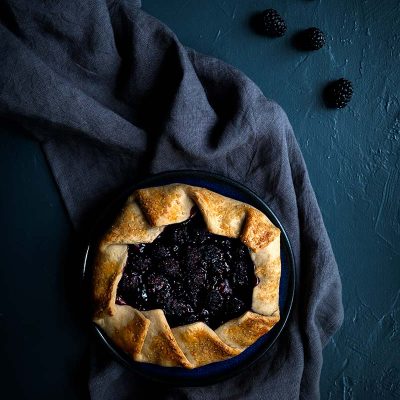
Galette
A rustic, free-form tart prepared with a single crust, typically pastry or bread dough. Galettes can be sweet or savory.
Garnish
A decorative, edible accompaniment to a finished dish, or the addition of such an element. Garnishes may be eaten, but are intended for visual appeal.
Giblets
The edible internal organs of poultry, which are often used to make gravy. Giblets include the liver, heart, and neck.
Ghee
A clarified butter from which all water and solids have been removed, allowing it to be cooked at a higher temperature than any oil. Extensively used in Indian cuisine.
Glaze
Coating a food with a glossy syrup or icing, often for visual appeal.
Gluten
A family of proteins found in wheat and other grain flours that provide bread and other baked goods with elasticity, and help dough rise by trapping bubbles made by fermenting yeast in the dough as it bakes. People who have celiac disease need to avoid gluten entirely.
Grate
Rubbing foods such as hard cheeses, vegetables, or whole spices across a grater (or a microplane zester) to create smaller pieces.
Gratin
Derived from the French verb gratiner, which means to broil. Gratin is a term that describes a dish baked or broiled in a shallow dish usually topped with breadcrumbs or cheese, in order to form a golden crust.
Grease
Coating the interior of a vessel, such as a baking dish or skillet, with a thin layer of shortening, butter, or oil to prevent sticking.
Grind
Mechanically breaking down food into tiny particles using a grinder or food processor.
Half-and-Half
A mixture of equal parts cream and milk, resulting in approximately 12% milk fat. Half-and-half cannot be whipped like heavy cream due to its lower fat content. {Learn how to make your own half-and-half!}
Infuse
The process of steeping an aromatic ingredient in hot liquid until the flavor is extracted and absorbed by the liquid.
Juice
The process of extracting natural liquids from fruits and vegetables, by hand or with an electric juicer.
Julienne
Cutting fruits, vegetables, herbs, or cheeses into long, matchstick-shaped strips.
Knead
Working or pressing dough—using the palms of your hands or a mixer—until it is smooth and elastic. Kneading develops the gluten in bread dough, an essential step when making most yeast breads.
Kosher Salt
A coarse, flaky salt made without additives, which offers a clean, bright flavor and lower sodium content than table salt. Named because it’s used during the process of koshering meat.
Lard
A product made from the fat found along the back and below the skin of a hog. Lard is known for producing exceptionally light and flaky pie crusts, but shortening is commonly used in its place by many modern bakers.
Leavener
An ingredient that helps batters and doughs expand or rise during baking, preventing the finished dish from being heavy or tough. Baking soda, baking powder, and yeast are common leaveners.
Lukewarm
A temperature that’s neither cool nor warm; approximately body temperature.
Macerate
The process of soaking food in a liquid to soften it or break it into pieces, most frequently used for fruit. Macerating can also be used to flavor the food by the liquid it absorbs, for example, when macerating in vinegar.
Mandoline
A slicing utensil made from a flat frame with adjustable blades, often used for slicing vegetables very thinly.
Marble
The process of gently swirling one ingredient or mixture into another, most commonly used when mixing two tones of batter as a decorative technique for cakes or cookies.
Marinade
A blend of liquids, spices, and herbs used to flavor (and sometimes tenderize) meat, poultry, seafood, or vegetables before cooking. Most marinades used with meat include an acidic ingredient to tenderize the protein.
Marinate
The technique of soaking meat, poultry, fish, and occasionally vegetables in a flavored liquid, or marinade, before cooking.
Mash
Pressing or beating a food to remove any lumps, until a smooth mixture is formed. Mashing can be done using a fork, potato masher, electric mixer, or food mill.
Microplane Zester
A tool with a long metal shaft covered in small sharp teeth, used for grating the rinds of citrus fruit or hard whole spices like nutmeg. It’s also good for finely grating cheese.
Mince
Chopping into very tiny pieces, usually with a knife.
Mirepoix
A mix of onion, carrot, and celery chopped and sautéed slowly in oil or butter to build flavor without browning, forming the base for dishes like sauces, stews, and soups. Typically, the ratio of the mixture should be 50% onion, 25% carrot, and 25% celery. Mirepoix is traditionally a French technique though many other cooking traditions have similar flavor bases. For example, traditional Cajun and Creole cooking replaces carrots with bell peppers, where the mirepoix is referred to as the “holy trinity”.
Mise en Place
A French term that describes the preparation process for efficient cooking. Mise en place is complete when all the ingredients are prepared and ready to combine up to the point of cooking.
Mix
Stirring or beating two or more foods together until thoroughly combined. Mixing may be done by hand, or with a tool like an electric mixer or rotary beater.
Moisten
Adding just enough liquid to a dry mixture to make it damp, but not runny or fully liquid.
Mortar and Pestle
A pair of tools used to grind or crush solids into powders. The set includes a bowl (the mortar) and a club-shaped utensil (the pestle), which is rotated against the mortar to grind grains, herbs, spices, and other substances. The mortar and pestle are generally made from a sturdy material like marble, stone, wood, or pottery.
Mother Sauce
In French cooking, these are the five basic sauces that every chef should master. These basic sauces are a fundamental of professional cooking and allow for countless variations. The Mother Sauces include: Béchamel, Velouté, Espagnole, Hollandaise, and Tomato.
Offset Spatula
A tool with a long, flat, and narrow metal blade most often used for spreading batter in a cake pan or frosting onto a finished cake. The blade features a blunt end and offers a large surface area for spreading batter or frosting evenly. {Watch me using my offset spatula in this Yellow Cake recipe!}
Pan-Fry
The technique of cooking a food in a skillet or pan with a small amount of fat.
Parboil
Boiling a food, most commonly a vegetable, until it is partially cooked. Parboiling is generally done in preparation for another cooking method.
Parchment Paper
A paper that’s resistant to grease and heat, used to line baking pans or wrap food.
Pare
Cutting away the skin or outer surface of a fruit or vegetable with a knife or peeler.
Pastry Blender
A utensil used to mix a hard fat, like butter, into flour when making baked goods like pie crusts, biscuits, or other flaky pastries. The blender is made from narrow metal blades or wires attached to a handle, allowing the user to cut the butter into small pieces and distribute them throughout the flour mixture, without incorporating them completely.
Peel
Cutting away the rind or skin of a fruit or vegetable. Peel can also refer to the rind or skin itself.
Pickle
The technique of preserving vegetables, fruits, and meats in vinegar, brine, or a similar solution to give food a pleasing acidic flavor, as well as prevent bacterial growth during long-term storage.
Pinch
A small amount of a dry ingredient—the quantity that can be held between a fingertip and thumb.
Pipe
Using a pastry bag to apply a semi-soft substance, like whipped cream or frosting, in decorative patterns.
Pit
Removing the inedible seed from a fruit.
Poach
Cooking a food gently over a very low heat by partially or fully submerging it in a simmering liquid.
Pound
Striking a food with a heavy utensil such as a mallet. This technique can be used to crush a food, or break down the connective tissue of meat and poultry to tenderize or flatten it.
Precook
Partially or completely cooking a food in preparation for using it in a recipe.
Preheat
Heating the oven or a pan to a specific temperature in preparation for cooking.
Process
This term may be used to describe the preservation of food at home by canning, or the preparation of an ingredient in a food processor.
Proof
Allowing a yeasted dough to rise before baking. The process of testing whether yeast is still active by dissolving it in water and adding sugar or carbohydrates is also called proofing.
Purée
Mashing or otherwise processing a food until it is as smooth as possible. This may be done using a blender, food processor, sieve, or food mill. The term can also refer to the mixture itself.
Reconstitute
Returning a dehydrated, concentrated or condensed food back to its original strength and/or texture by adding water.
Reduce/Reduction
Decreasing the volume of a liquid by boiling it to cause evaporation, which results in thickening and an intensified flavor. The resulting liquid is called a reduction, and can be used as a sauce or sauce base.
Render
Cooking a fatty meat or poultry product (like bacon or goose) over a low heat until the solid fat melts into a liquid, producing drippings.
Ribbon
In baking, a stage during the process of beating whole eggs or egg yolks with sugar when the mixture becomes thick and pale yellow, and falls in ribbons if you lift the beater over the rest of the mixture in the bowl. The ribbons are not immediately absorbed and will hold their shape for a little while. Often used in the phrase “beat until a ribbon forms.”
Rind
The thick skin or outer coating of a food, most often a fruit, vegetable, or cheese.
Roast
The cooking of foods, uncovered, using the dry heat of an oven. Best used for vegetables and tender meats.
Roulade
A dish of filled and rolled meat or pastry. Savory roulades commonly combine meat with a vegetable or cheese filling, while sweet roulades are often sponge cakes filled with fruit or buttercream. From the French for “to roll.”
Roux
The French term for an equal mixture of flour and fat, cooked together as the base for a dish. A roux is the starting point for many sauces and stews, and is often used as a thickener.
Sauté
From the French for “to jump,” this term refers to a cooking technique in which food is stirred in a small amount of fat over fairly high heat. Sautéing is best done in an open, shallow pan with food cut into uniform sizes.
Sautoir
A pan with a large cooking surface, straight short sides, and a long handle that allows the cook to toss the food inside while sautéing.
Scald
Heating a liquid, often milk, to just below the boiling point. A liquid is scalded when tiny bubbles begin to appear around the edges of the pot.
Score
Cutting narrow slits, commonly in a diamond pattern, across the outer surface of a food. Scoring may be used to decorate the item, tenderize it, help it absorb flavors, or drain fat as it cooks.
Sear
Browning the surface of meat by cooking it quickly over intense heat. Searing works to seal in the meat’s juices, develop flavor, and create an appetizing appearance.
Self-Rising Flour
A combination of all-purpose flour, baking powder, and salt that can be used to bake quick breads, biscuits, and pancakes.
Shred
Pushing food across a grater to produce long, narrow strips. Lettuce and cabbage can be shredded by cutting into thin strands with a knife. Tender, cooked meat is sometimes shredded using two forks.
Shock
Plunging a food, usually a fruit or vegetable, into ice water after blanching to halt the cooking process.
Sieve
The separation of solids from a liquid, done by passing the mixture through a fine mesh vessel. The term may also refer to the vessel itself.
Sift
Passing dry ingredients, particularly flour, confectioners’ sugar, and cocoa powder, through a sieve. This technique is used to prevent lumps and incorporate air. Sifted ingredients are also use for decorative purposes, such as confectioners’ sugar over a dessert.
Simmer
Cooking in a liquid that is kept just below the boiling point. A liquid is simmering when bubbles form but do not burst at the surface.
Skewer
The insertion of a long, narrow stick made of metal or wood through meat, seafood and vegetables in preparation for grilling.
Skim
Removing a substance like fat or foam after it rises to the surface of a liquid.
Slice
A flat, thin portion of food cut from a larger piece. The term may also refer to the process of cutting these flat, thin portions.
Slurry
A mixture of starch and water made from starch and cold liquid. A cornstarch slurry can be used for dairy sauces; arrowroot is best for defatted meat sauces or broths; and potato starch, rice flour, or regular flour can be chosen for general use. Often used to thicken a sauce, soup, or stew.
Smoke Point
The temperature at which a fat like butter or oil smokes, giving off an unpleasant flavor and odor. Smoke points for various fats range from 225-450 degrees F. {Read more about smoke points!}
Spatchcock
Also known as butterflying, spatchcock is a French technique that removes the backbone so it can be opened flat for direct heat cooking. This technique helps to reduce cooking time and allows white meat and dark meat to cook more evenly.
Springform Pan
A type of baking pan in which the sides can be separated from the base, allowing the food inside to be easily removed after cooking. Often used for baking cheesecakes.
Steam
Cooking food in the vapor of boiling water, but not within the water itself. Food may be steamed in a pressure cooker, double boiler, or steamer rack in a covered pan. Steaming can also be accomplished with the microwave, though this is a less conventional method.
Steep
The extraction of color or flavor from a substance (tea, herbs, etc) by soaking it in liquid that’s heated to just below the boiling point.
Stew
The technique of cooking food in liquid for a long time until tender, usually in a covered vessel. The term can also refer to the resulting dish.
Stir-Fry
A cooking method in which small pieces of food are quickly fried by constantly stirring in a small amount of hot oil. Stir-fries are prepared in a wok or skillet over medium-high or high heat.
Stock
A clear, strained liquid made from meat, poultry, or fish that has been simmered in water with vegetables and herbs. Unlike broth, stock is made using bones and cartilage to produce a thicker, more concentrated liquid. Browning the meat, bones, and vegetables before adding them to the liquid is often done to develop an even richer flavor for the stock. Stock can also be created using only vegetables and herbs for use in vegetarian and vegan cuisine.
Sweat
The technique of cooking vegetables in fat over a gentle heat source, causing them to become soft but not brown. Sweating concentrates the juices of the vegetables in the cooking fat, and helps the vegetables retain their natural moisture if the pan is covered.
Temper
The process of heating and cooling chocolate to specific temperatures, so it hardens into a shiny state that snaps when broken. Chocolate that has not been tempered may cool into a softer form with a streaky finish. This term can also refer to tempering eggs, where the temperature of beaten eggs or egg whites are slowly increased by adding small amounts of hot liquid. Examples of when eggs are temped: custards, ice creams, and meringues. {See my mint chocolate chip ice cream for an example of tempering eggs!}
Thickeners
Substances that create a thicker consistency in a sauce, gravy, pudding, or soup. Common thickeners include all-purpose flour, cornstarch, and quick-cooking tapioca. {Check out how I use a thickener in this Vanilla Pudding recipe}
Toast
Browning and crisping a food (often bread, nuts and seeds) through exposure to a dry heat source such as the oven or a hot pan.
Truss
Securing a whole chicken or other poultry with string and/or skewers, so it holds its shape while cooking.
Umami
The Japanese term for a fifth taste (in addition to sweet, salty, sour, and bitter) often described as savory or meaty. Umami flavors are derived from glutamate-rich foods including mushrooms, tomatoes, Parmesan, and soy sauce.
Velouté
One of the five Mother Sauces in French cooking, a velouté is a rich white sauce made from chicken, veal, or fish stock thickened with a white roux.
Whip
Beating a food lightly yet rapidly to increase its volume and incorporate air. May be done with a whisk, rotary beater, or electric mixer.
Zest
The colored outer portion of a citrus rind, often used as a seasoning due to its high concentration of rich fruit oils. To zest refers to the process of removing this part of the peel from the fruit, which is often done using a microplane grater.